Tree Guide
Coastal Conditions and How They Shape Trees
Salt spray, sandy soil, high water tables, and how they shape tree health in Brunswick County.
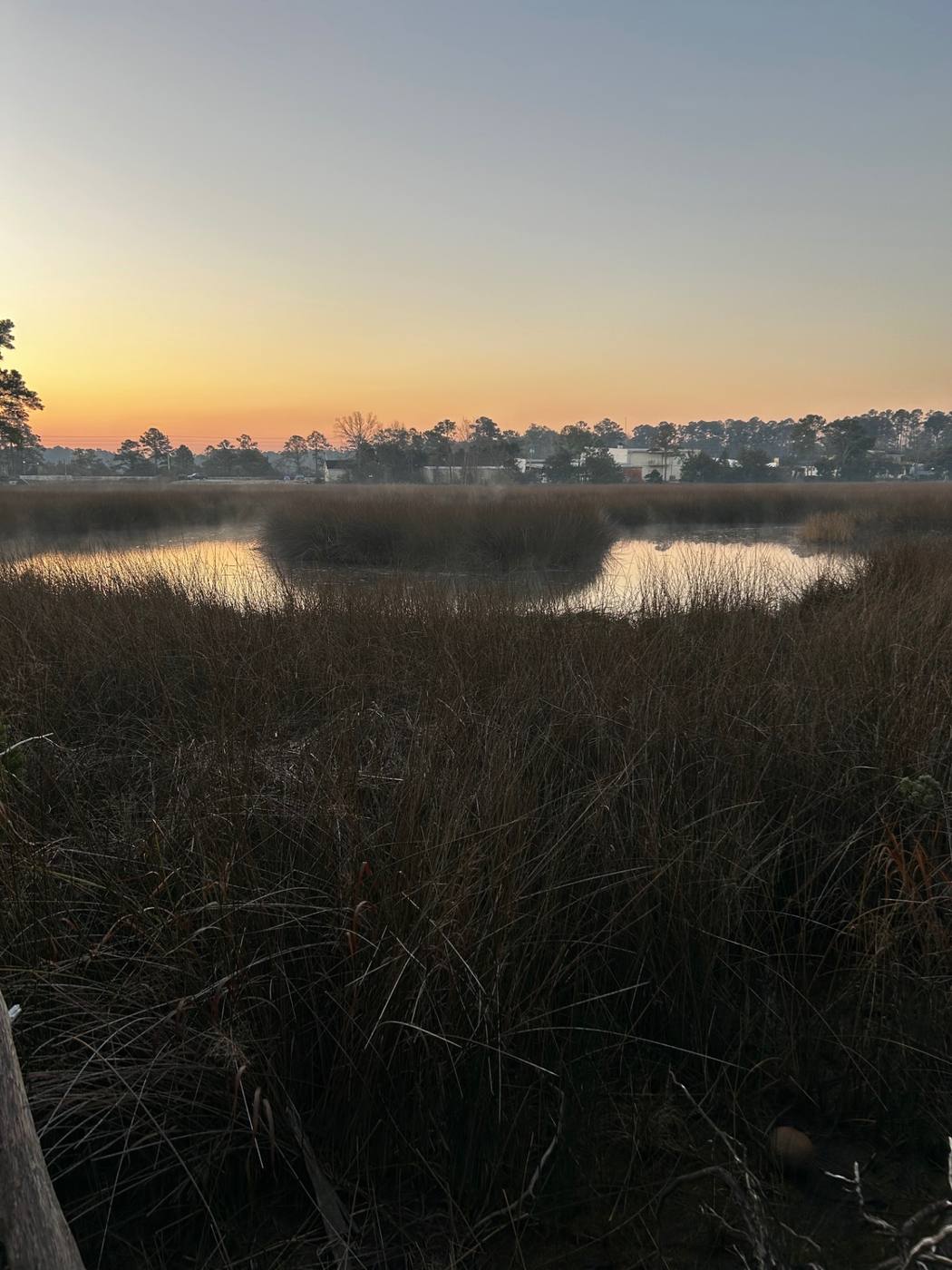
Trees on the Brunswick County coast face a specific stack of pressures. Every planting decision, watering habit, and pruning schedule should account for them.
Sandy soil
Most coastal lots are dominated by sandy loam or almost pure sand. That means:
- Fast drainage — sprinklers barely wet the surface; deep, slow watering is required to reach roots.
- Low nutrient holding capacity — nitrogen and potassium leach fast; compost and mulch matter more here than in clay soils.
- Low moisture retention — even native trees can suffer in prolonged drought without help.
The fix is mulch (2–3 inches deep, out to the drip line) and soaker-hose watering when it hasn't rained for two weeks.
Salt spray
Salt tolerance drops sharply from the beach inland. Trees on Oak Island, Sunset Beach, Holden Beach, and Ocean Isle need genuine salt tolerance. Mainland trees in Leland or Bolivia rarely see meaningful salt except during hurricanes — when a storm-driven salt event can burn foliage 5–10 miles inland.
Highly salt-tolerant: live oak, sabal palmetto, wax myrtle, yaupon holly, eastern red cedar, bald cypress.
Moderate: southern magnolia, longleaf pine, American holly.
Sensitive: dogwood, most maples, loblolly pine (surprisingly), most ornamental fruit trees.
High water table and flooding
Much of Brunswick County has groundwater within a few feet of the surface. During heavy rain or storm surge, saturation can drown fine roots within 72 hours. Species matched to wet sites (bald cypress, sweetbay magnolia, red maple) handle it. Species that need drainage (dogwood, loblolly pine, most oaks) decline slowly when planted in low spots.
Know your low spots. Match the tree to the site — not the other way around.
Hurricane wind
Trees in Brunswick County have to survive named storms, not just thunderstorms. Deep-rooted, flexible-wooded species (live oak, longleaf pine, bald cypress) hold up. Shallow-rooted, brittle, or overgrown species (loblolly pine planted in the open, Bradford pear, Leyland cypress) do not. Every planting choice is a hurricane-season bet.
Not sure about a tree on your property?
Send us a quick description or photo. We'll share honest, free guidance and — if you need one — connect you with a trusted Brunswick County arborist.