Tree Health
Healthy trees rarely fall. Sick trees usually warn you first.
Learn to read the visible signals your trees are giving off — from canopy thinning to bark changes — and know which problems demand a professional diagnosis.
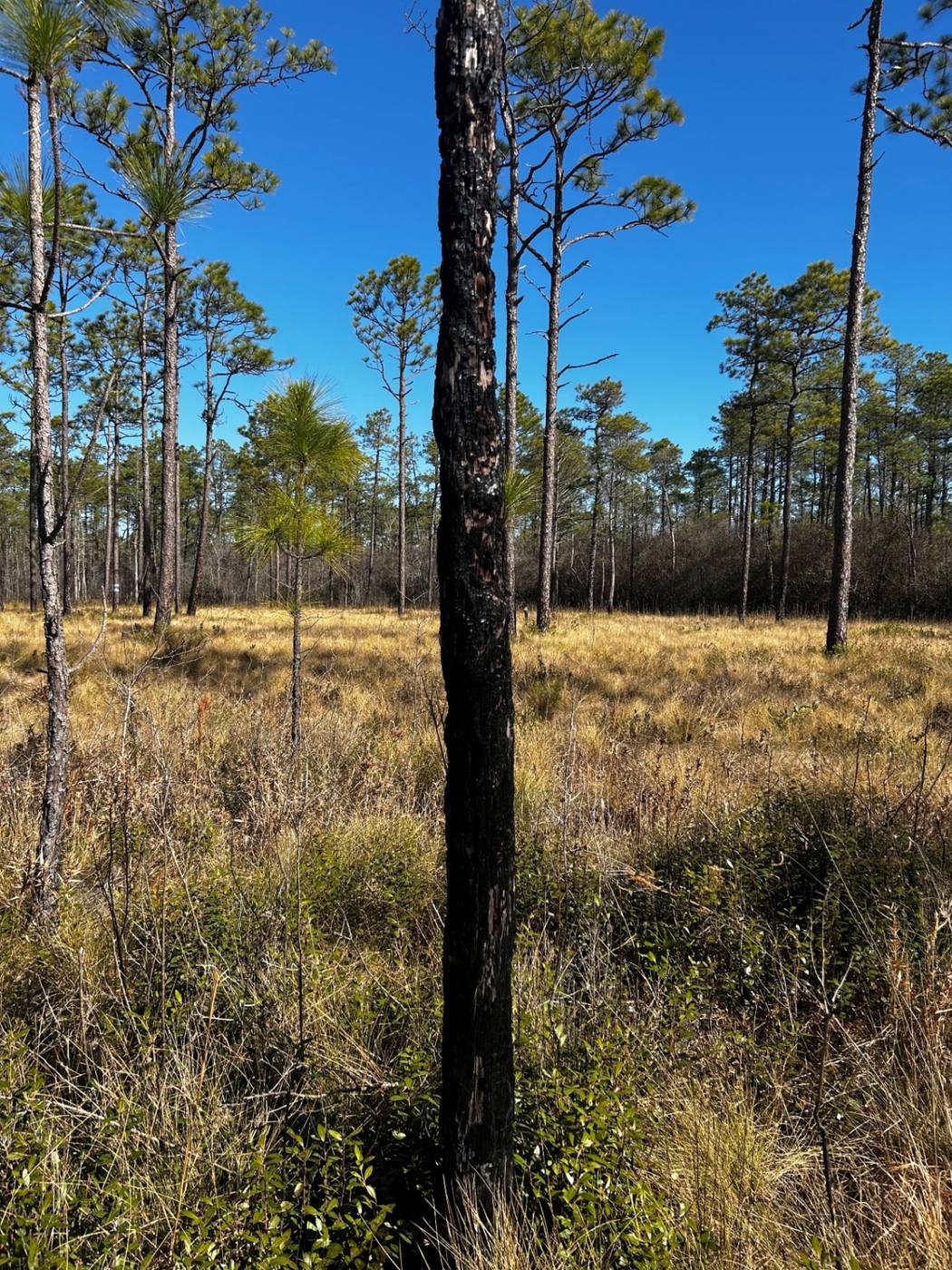
Visible bark damage and blackened wood — one of the clearest signals a tree needs a closer look.
Signs of a stressed tree
- Progressive canopy thinning year over year
- Off-season leaf drop or early color change
- Sap bleeding from the trunk (some species only)
- Fungal conks or mushrooms at the root flare
- Cracks or peeling bark in structural branches
Common coastal issues
- Salt exposure after hurricane storm surge
- Sandy soil moisture swings — flood then drought
- Root damage from construction and grade changes
- Southern pine beetle and pine bark beetle activity
- Girdling roots on trees planted too deep
What you can do
- Mulch properly — a ring, not a volcano
- Water deeply during summer drought (young trees especially)
- Never top a tree — it invites decay and weak regrowth
- Avoid string trimmers near the base of trunks
When to call a pro
Any sudden change in a mature tree, suspected pest activity, or a tree you rely on for shade or wind protection deserves an ISA-certified arborist's diagnosis — often for less than $150.
Tree health FAQ
Why are the leaves on my oak turning brown early?+
Common causes include drought stress, root damage, oak wilt (rare in NC), or bacterial leaf scorch. A certified arborist can diagnose specifically.
Is Spanish moss killing my tree?+
No. Spanish moss is an epiphyte — it lives on the tree without feeding from it. Heavy loads on already-weak branches are the only concern.
What does mulch actually do?+
A 2–4 inch ring of mulch (never touching the trunk) conserves moisture, buffers soil temperature, and prevents mower damage — one of the highest-impact things you can do.
Not sure about a tree on your property?
Send us a quick description or photo. We'll share honest, free guidance and — if you need one — connect you with a trusted Brunswick County arborist.