Homeowner Q&A
Hanging Limbs (Widow-Makers)
Broken 'widow-makers' can hang for months. Here's how to spot and safely flag them.
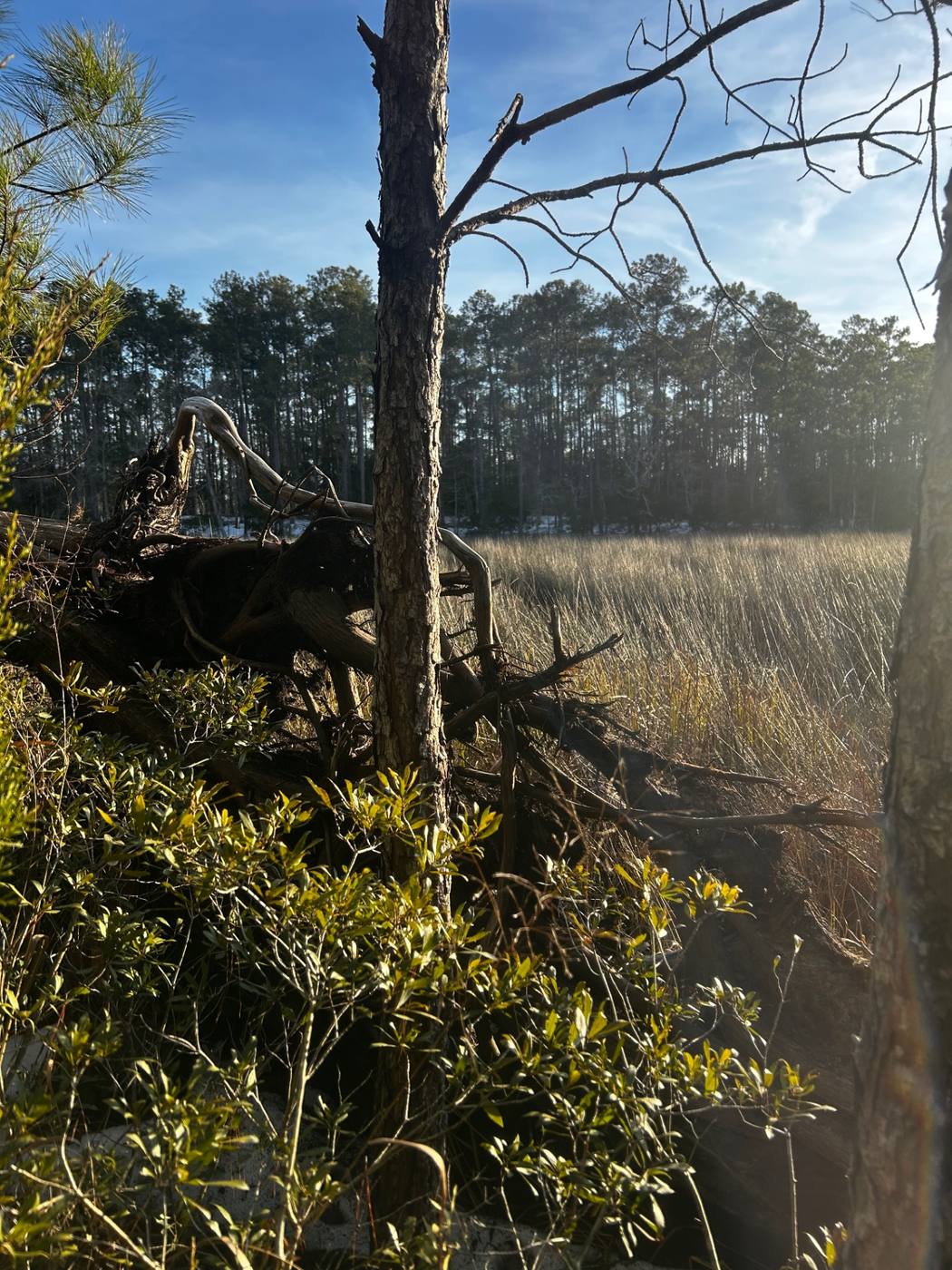
Broken but caught limbs — called widow-makers by working arborists for a reason — are one of the most underestimated hazards on a residential property. They fall on calm, sunny days, weeks or months after the storm that broke them. Every year they cause serious injuries in Brunswick County.
Where to look
- Directly above walkways, driveways, and play areas.
- Where a large limb split from the trunk and the broken end lodged in nearby branches.
- Along the edges of storm-damaged canopies — the biggest breaks throw the largest hangers.
- In loblolly pines especially — the long straight limbs snap and hang without support.
What to do (and not do)
- Do not stand under any hanging limb while assessing it. Look from a safe angle.
- Do not try to knock it down with a rake, hose, or thrown object. That's how people are killed.
- Do not shoot it down. We have to say this.
- Rope off the area below and keep kids and pets clear.
- Call a certified crew with rigging capability. Removing a widow-maker safely usually requires bucket access or a climber tied in above the hanger — this is not a DIY job.
Timing
Every hanger comes down eventually. Wind, rain, birds, or its own weight will bring it. Removing one costs $150–$500 depending on access; letting one fall on someone costs much more. Handle it in the first week after you notice it.
Preventing them
Structural pruning done a year before hurricane season removes weak, over-extended limbs before they become hangers. It's the single best investment you can make in a mature-tree yard on the coast.
Not sure about a tree on your property?
Send us a quick description or photo. We'll share honest, free guidance and — if you need one — connect you with a trusted Brunswick County arborist.