Tree Guide
Native Brunswick County Trees
Live oaks, longleaf and loblolly pines, bald cypress, southern magnolia, dogwood — meet the locals.
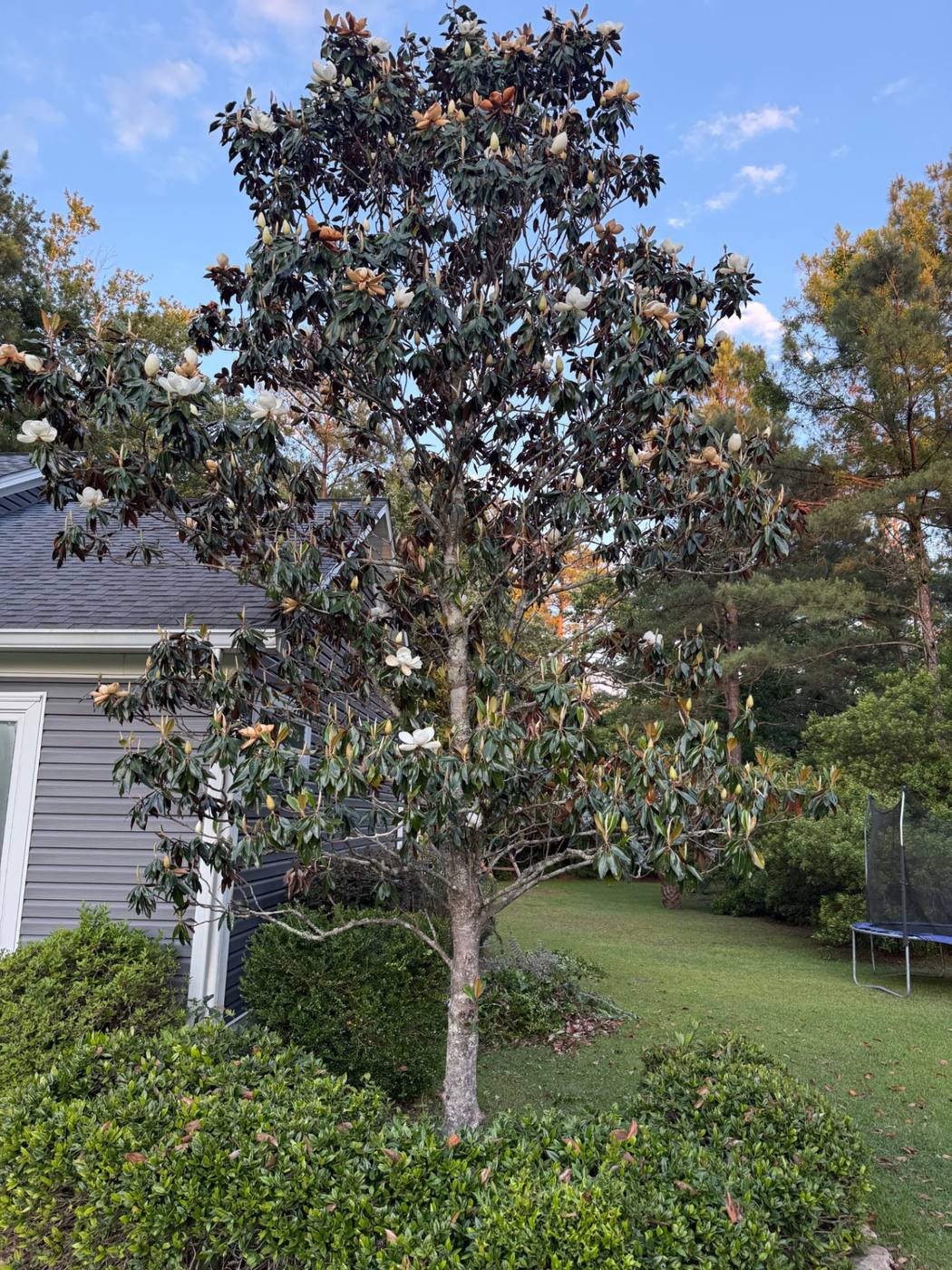
Brunswick County sits in the transition between the coastal plain and the barrier islands, which means a genuinely diverse native tree mix — more than most homeowners realize. Knowing what's growing on your lot is the first step to knowing how to care for it.
The signature species
Live oak (Quercus virginiana) — the tree that defines the coast. Sprawling horizontal habit, evergreen, salt- and wind-tolerant, and long-lived (200+ years). If you have one, protect it at all costs.
Longleaf pine (Pinus palustris) — the historically dominant pine of the region, now less common than the loblolly. Deep taproot, wind-firm, beautiful when mature.
Loblolly pine (Pinus taeda) — the fast-growing pine that colonized every cleared lot. Great for privacy and shade, but shallow-rooted and often the tree that falls in hurricanes.
Bald cypress (Taxodium distichum) — deciduous conifer, thrives in wet ground, iconic knees. Excellent along ditches and low spots.
Southern magnolia (Magnolia grandiflora) — evergreen, glossy leaves, huge white flowers. Wind-firm when healthy, needs room.
Common natives you may not have identified
- Sweetbay magnolia — smaller, wet-tolerant cousin of southern magnolia
- Water oak / laurel oak — common, medium-lived, prone to internal decay in middle age
- American holly — evergreen, wildlife-friendly, slow but long-lived
- Yaupon holly — smaller, salt-tolerant, historically used for tea
- Eastern red cedar — extremely salt- and wind-tolerant, aromatic
- Wax myrtle — semi-evergreen, tough, fixes nitrogen
- Sabal palmetto — native palm, common on barrier islands
- Dogwood, redbud, fringe tree — native flowering understory
Non-natives to be aware of
Bradford pear, mimosa (silk tree), princess tree, tallow tree, and chinaberry are non-native and often invasive. They spread aggressively and provide little wildlife value. If you find them on your lot, consider gradual replacement with natives.
Why native matters here
Native species evolved with coastal wind, salt, sandy soil, and hurricane cycles. They also support the local pollinator and bird populations that make Brunswick County yards feel alive. A yard planted mostly in natives is dramatically easier to maintain and more resilient to storms than one planted in nursery-favorite non-natives.
Not sure about a tree on your property?
Send us a quick description or photo. We'll share honest, free guidance and — if you need one — connect you with a trusted Brunswick County arborist.