Homeowner Q&A
Tree Lean Guide
Not every lean is dangerous — but a new lean, soil heave, or exposed roots almost always is.
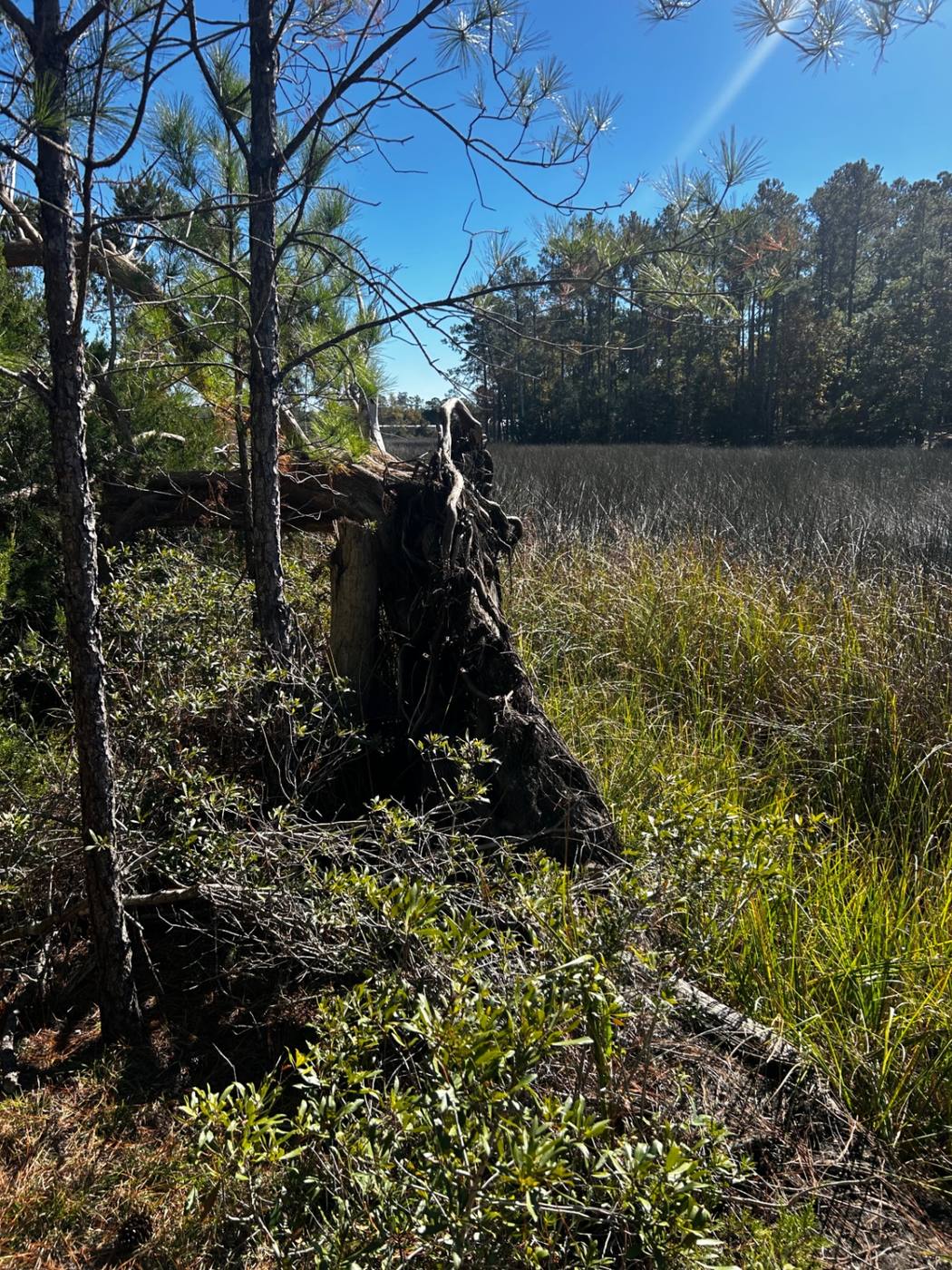
Leans are the most misread signal in tree assessment. Some leaning trees are completely stable. Others are one gust from your roof. The difference is almost always visible if you know what to look for.
Stable leans
- Present for years — verify with old photos or Street View.
- Upper branches have grown back toward vertical ("corrected" growth).
- No soil movement at the base.
- No visible root damage.
- Species is deep-rooted (live oak, longleaf pine, bald cypress).
A tree that grew this way is almost always fine.
Concerning leans
- New — appeared after a storm, heavy rain, or nearby construction.
- Soil heaved or cracked on the uphill side.
- Exposed or torn roots.
- Lean greater than ~15° from vertical with no corrected upper growth.
- Species is shallow-rooted (loblolly pine, leyland cypress, water oak).
Any of these means the root plate is moving. Rope off the fall zone and get an assessment the same week.
Measuring the strike zone
The area at risk if the tree falls is roughly the tree's height, in the direction of the lean, plus about 50% more for the arc of falling limbs. Map that on your lot — if it covers your house, driveway, or a neighbor's structure, urgency goes up.
The species factor
In Brunswick County, a leaning loblolly pine deserves more concern than a leaning live oak of the same angle. Loblollies are shallow-rooted and grow in the same sandy, easily saturated soils that a leaning tree needs to resist. Live oaks and longleaf pines are much more likely to hold.
When to remove
Remove when the lean is new, the root plate is compromised, or a valuable target sits in the fall zone. Preserve when the lean is old, the tree is healthy, and there's no target below. When in doubt, get a certified opinion — removing a healthy leaning tree "to be safe" is often the wrong call.
Not sure about a tree on your property?
Send us a quick description or photo. We'll share honest, free guidance and — if you need one — connect you with a trusted Brunswick County arborist.